
In my pursuit to share the wonderful world of DNA with folks far and near, I’m always looking for opportunities to present DNA-themed programs. The Heritage Room at the Berne Public Library has hosted several such presentations, and it was on one of these occasions that I met sisters Judy Neuenschwander and Melissa Fey. When we chatted at the conclusion of the program, they shared their personal interest in learning about DNA centered around their mother, Izzy, who had passed away in 1997. Their burning question: Could their own DNA test results help the search to discover their mother’s birth parents? My answer, a hearty YES, was immediate.
A few months later our paths crossed again when the Heritage Room hosted a six-week course on utilizing the wealth of information available on Ancestry.com. Melissa and Judy were eager to dig into the 100-plus-year mystery of their mother’s origins. And so was I.
Elmer and Drusilla (Achleman) Raymond, who lived in Fort Wayne at the time, welcomed into their home a baby girl born on September 29, 1918. The couple, who had wed in 1912, named the wee one Ellen Isabelle Raymond. “Izzy” grew up an only child, a Daddy’s girl by all accounts, who enjoyed playing with her cousins who lived in the Berne area. She graduated from Central High School in Fort Wayne and attended Ball State Teacher’s College and Indiana Business College. In the late 1940s, after a brief marriage, she and young son Steve moved from Fort Wayne to Linn Grove to care for her grandmother, Mary Achleman. In 1950 she married Dale Grandlienard and together they raised daughters Judy and Melissa under the watchful eye of big brother Steve on a farm on State Road 116. Melissa now resides in the home where the siblings grew up.
It wasn’t until a fun day of shopping with Mom, when Judy and Melissa were in their 20s, that the sisters stumbled upon a surprising fact about Izzy. When one of the girls jokingly posed the question, “Did Grandma and Grandpa have to get married?”, Izzy’s answer sent shockwaves through the car, to the point that they missed their exit.
“That’s when she dropped the bombshell, ‘I was adopted,’” recalls Melissa. Questions poured from the stunned sisters, including the inquiry, “Were we adopted?” They were not, their mother assured. When asked why she had never told them this piece of her history, Izzy replied that “it never came up in conversation.”
Steve Randolph, who lives in Texas, concurs with his sisters’ conclusion that their mother didn’t necessarily intend to hide her adoption from them but rather she never found a “good time” to tell them. Steve recalls that as a youngster, his Grandpa Raymond mentioned that Izzy had been adopted. Because it didn’t seem to be a big deal to Grandpa, it didn’t become a big deal to Steve.
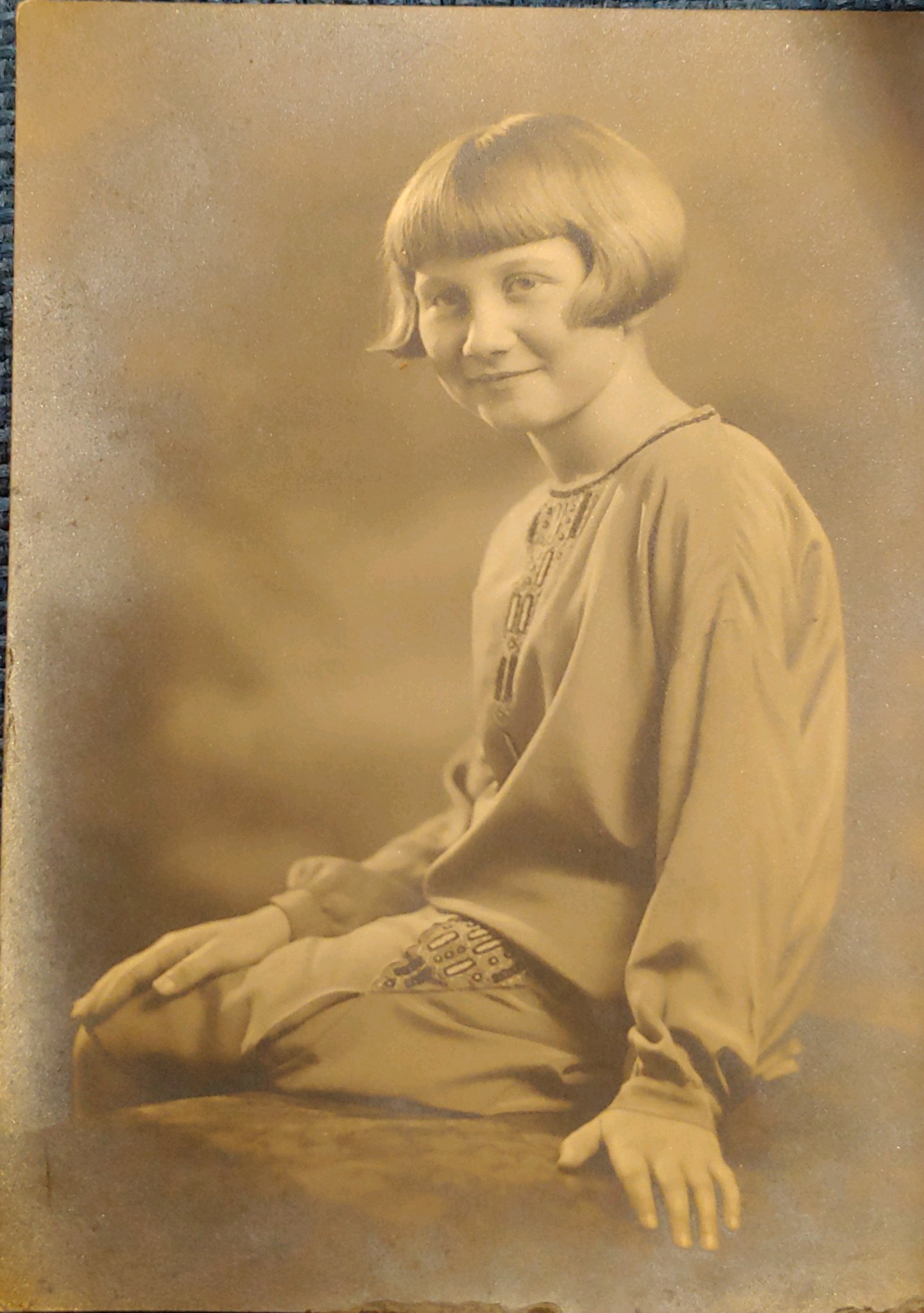
Izzy at 12-13 years of age
None of them remember a second conversation about Mom being adopted. Their independent, strong-minded mother seemed “comfortable in her skin,” shares Judy. She lived a full life as a wife and mother, working a variety of jobs over the years, including a stint in modeling. A desire to keep up with current events made her a faithful reader of the Sunday editions of the New York Times, Indianapolis Star, and when she could get it, the Chicago Tribune as well. She had a talent for playing the piano and enjoyed numerous hobbies from reading, sewing, and crocheting to growing orchids.
It wasn’t until years after her passing that the siblings considered launching a search for their mother’s biological family. But they faced a dilemma. If Mom didn’t feel the need to search, should we? Would she approve? Looking back, they had to wonder if her continual interest in checking the Fort Wayne newspaper for obituaries sprang from a desire to find family. Maybe she had searched and kept it to herself? They will never know.
“Well, inquiring minds want to know,” is how Steve sums up their mutual decision to look for answers some six or seven years ago. They poked around about a scrap of information here, a possible clue in a brief mention there, but uncovered nothing. They pondered the meaning of the term “war baby,” the one bit of information that Izzy’s parents had passed on to her, wondering if she had been placed for adoption when her biological father died in service to his country in World War I.
A couple of years later, Steve and Judy tested their DNA. But deciphering which side of the family their matches derived from proved challenging. In the meantime, Steve’s wife Nanette and daughter Casey delved into filling out the known branches on the extended family tree.
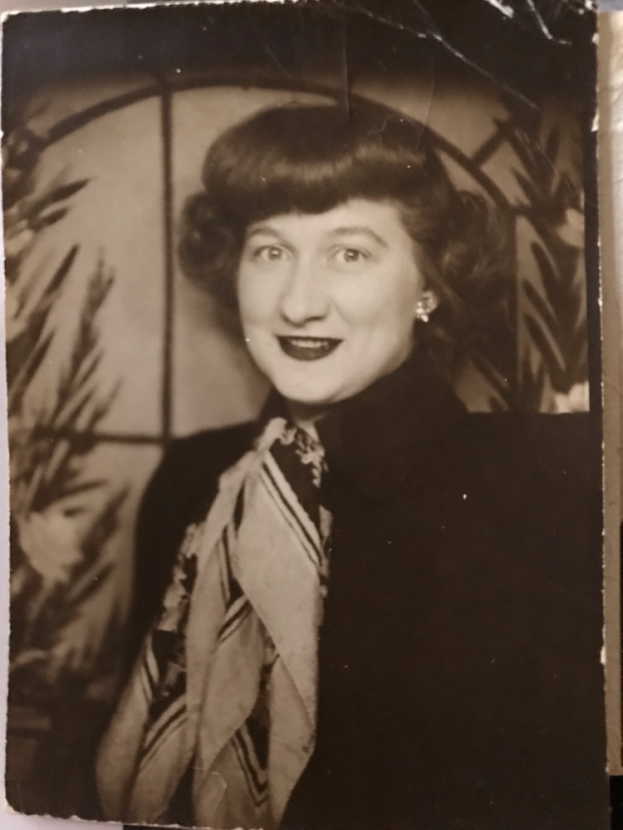
Izzy as a young woman
Back to my second meet up with Judy and Melissa at the library. Although Ancestry had recently added the feature that separated DNA matches into PARENT 1 and PARENT 2 categories, they hadn’t yet made much progress. I jotted down Izzy’s birthdate, coached them on how to “share” their DNA results with me, and within a few hours, I dug in. Knowing that the sealing of the original birth certificates of Indiana adoptees didn’t begin until 1941, I searched Ancestry.com’s archived records for a female born on September 29, 1918, in northern Indiana or even Ohio. And there it was. A birth certificate announcing a baby girl born in Fort Wayne to an unmarried couple—as noted by the No in the box labeled Legitimate?—each residing in Garrett, Indiana. Could this infant named Mary Ellen Anderson be the baby the Raymonds named Ellen Isabelle?
When I found no other records attached to Mary Ellen Anderson—census, marriage, death, or school records—my pulse quickened. Because if Mary Ellen had become Ellen Isabelle, there would be no records past that of a birth certificate for her. I tried to reign in the by-now familiar tingle of adrenaline because I knew the real proof would have to be found in the DNA. Would the family tree I assembled based on Melissa’s matches lead to Ray Snyder and Ida Anderson—the parents on Mary Ellen Anderson’s birth certificate?
I tucked into the back recesses of my mind the very-plausible possibility that Izzy had been born Mary Ellen and, the next day, set about connecting Melissa’s DNA matches. The highest maternal matches were in the second to third cousin range, and they hailed from the Noble and DeKalb county portions of Indiana—the right general area.
As I fleshed out the great- and great-great grandparents of these second and third cousin matches, the tree grew, and for a while, I got lost in the plotting of the large families typical of that era. When I ran out of the easiest-to-place matches, I perused the surnames of the 120+ plus people. No one carried the last name Anderson, but I spied the surname Snider, occasionally spelled with a “y” on various records. Staring back at me was a Ray Snider, born in 1897. And on a different, floating branch an Ida Andrews, born in 1901.
Could this be the same Ray and the same Ida listed on Mary Ellen’s birth certificate? The same Mary Ellen who appeared more likely than she had two hours ago to be Ellen Isabelle, the mother of Steve, Judy, and Melissa? My gut said yes, but it was 2 a.m., and I was too tired to test the connections with each match to confirm that the relationships lined up.
The next morning found me anxious to pick up where I’d left off. The connection with Melissa’s highest match, a second cousin, aligned perfectly on Ray’s side of the tree. The next match fit snuggly in a second cousin once removed spot on Ida’s portion of the tree. After confirming several more right-fit matches, I delved into learning more about Ray and Ida. She had married in 1919 and Ray in 1920. And while each couple remained wed until death claimed one of them decades later, neither had children. Ray had not died in the war as suspected, but his draft card signed six months before Mary Ellen was born may have been the root of the “war baby” story. Ray passed in 1973 while Ida lived until 1999, outliving Izzy by two years.
In past cases, I’d experienced numerous instances of how, in days gone by, spelling didn’t matter that much. And a fudged birth mother’s name on the birth certificate? Not at all uncommon. A final review of the evidence definitely stacked in favor of the mystery being solved. We’d gone as far as we could in confirming that Mary Ellen, born to Ray and Ida, became Ellen Isabelle, raised and loved by Elmer and Drusilla Raymond. It was time to share the news with Izzy’s children.
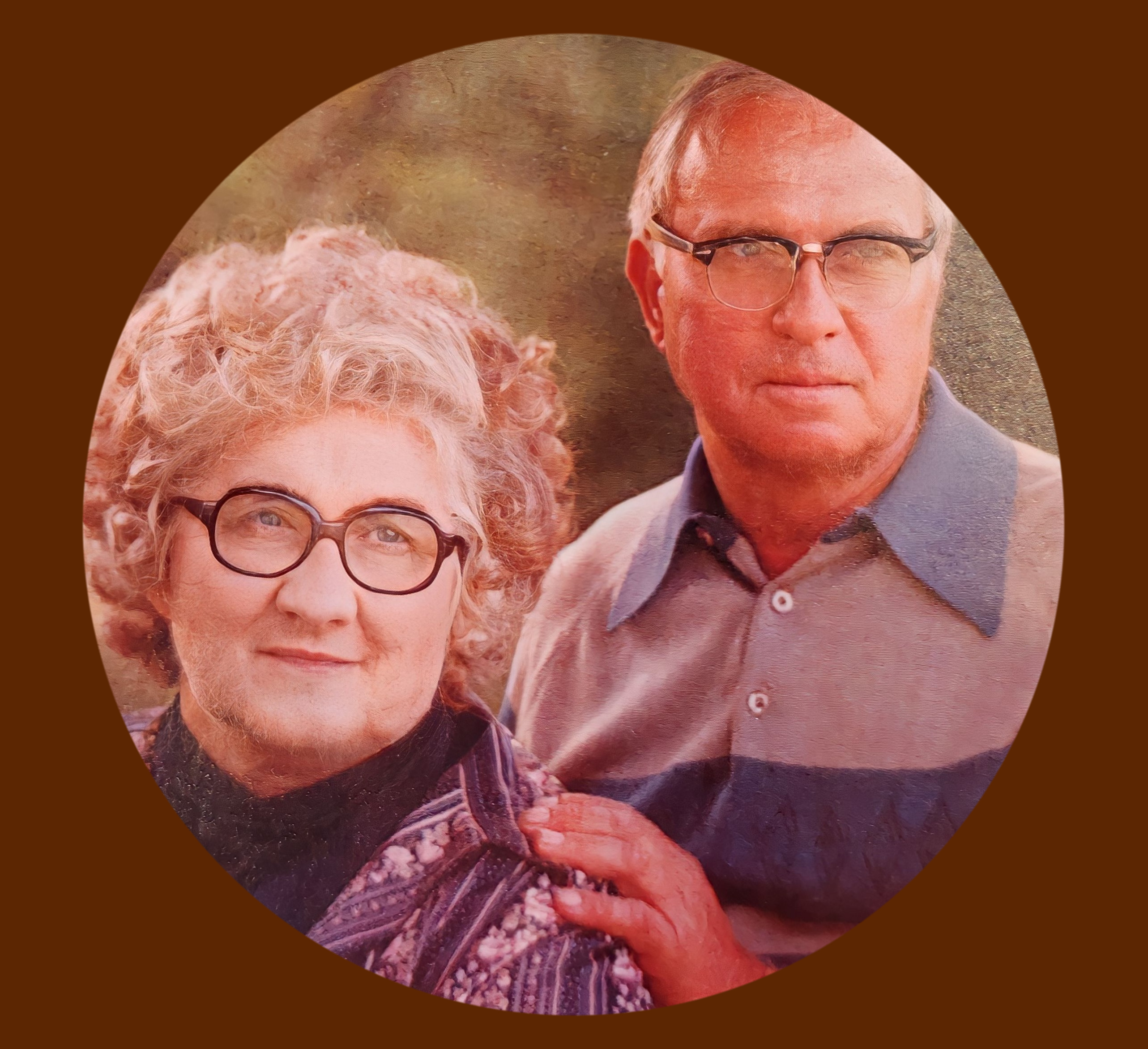
Dale and Izzy (Raymond) Grandlienard
While Steve, Judy, and Melissa would have welcomed the opportunity to meet family genetically connected to their mother, the reality is that the second, third, and fourth cousin matches are too far removed from their mother that making a connection would be unlikely. Still, the three siblings now know more about their maternal roots. But we’re still hoping to uncover pictures of Ray, Ida, or their parents because, after all, who doesn’t love seeking family resemblances?
 Beth Steury, Author