
For almost half of his life, Paul Gilgen has pondered a family mystery. In the late 1980s, Paul’s nephew Kim Eisenhut shared news of a long-held family secret, one that had tumbled out of hiding while family members sorted through old documents. It was discovered that Paul’s father, Marion Benjamin Gilgen born in 1898, had been Marion Benjamin Hoffman in his early years. Further research turned up documents stating that Marion’s mother, Sarah Hoffman, had married Otto Gilgen in late 1909, two months before Marion’s twelfth birthday.
The news that Marion had been adopted by rather than fathered by Gilgen, the man Paul and his siblings had always known as Grandpa, elicited various responses from the family, ranging from shock to intrigue to complete disbelief. All agreed with Paul’s surmising that, “No one of that generation wanted to disclose the family secret.”
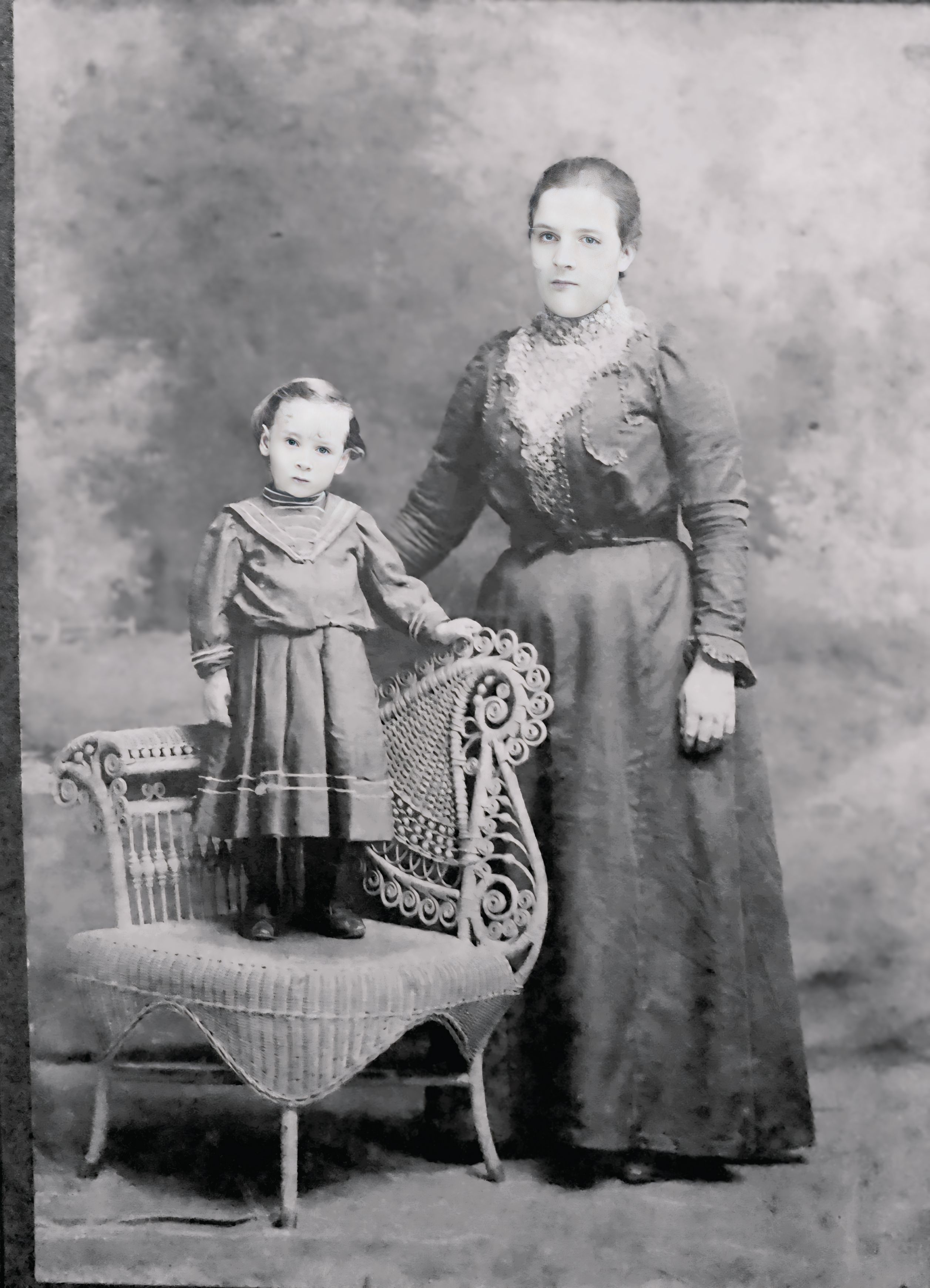
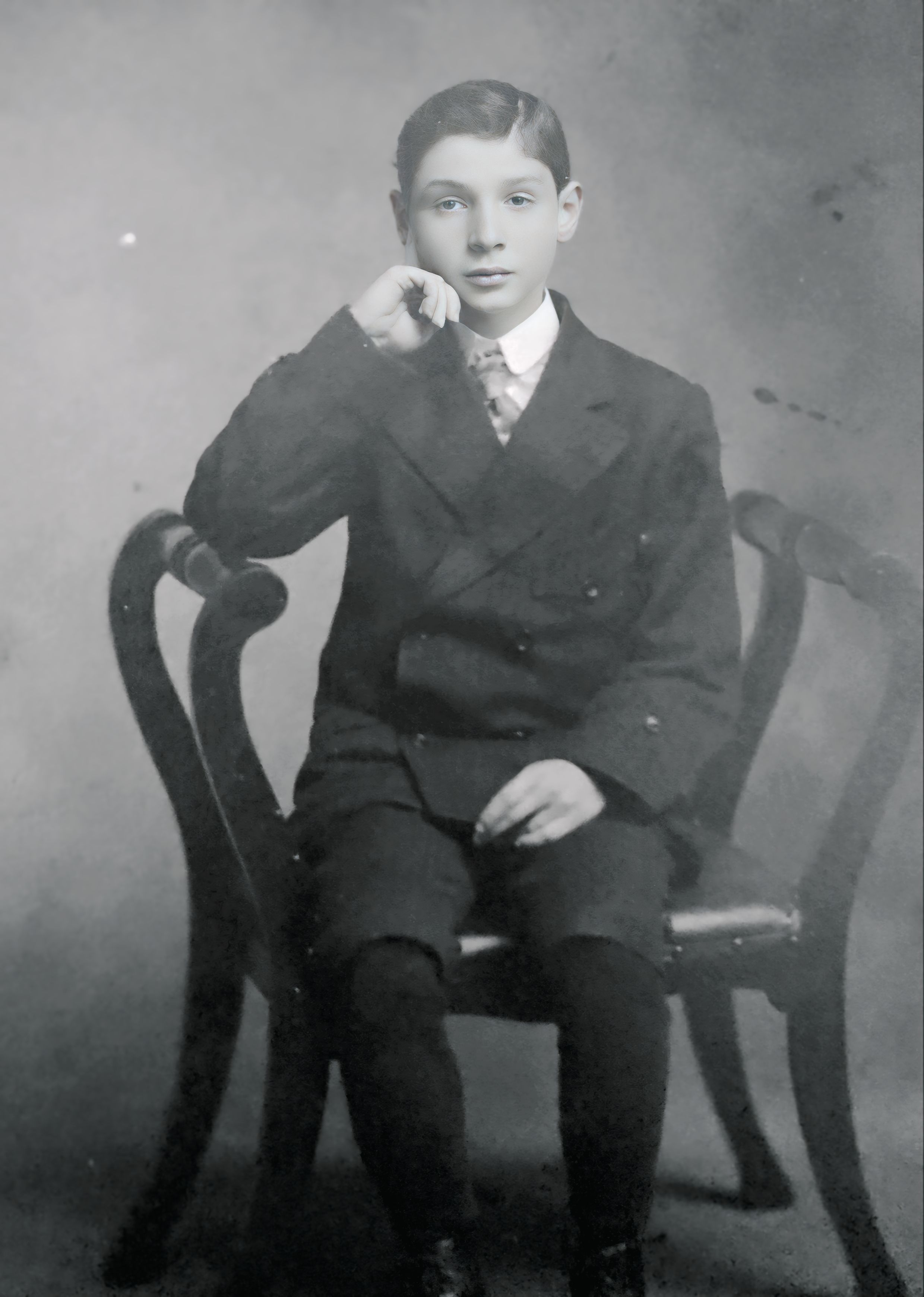
LEFT: Mother and son, Sarah Hoffman and a very young Marion Gilgen.
RIGHT: Gilgen as a young man.
By this time, both of Paul’s parents had passed. His father Marion succumbed to liver cancer in 1962, when Paul was just 17, and his mother, Bessie (Luginbill) Gilgen, passed in 1970. His grandmother Sarah, who could have shed the most light on the situation, had passed in 1947, and her husband Otto in 1958.
At the time of the discovery, Paul worked for the U.S. Forest Service (USFS) near Bozeman, Montana, but would soon find himself half a world away from the family-secret revelation. A two-year stint (1990-91) stationed Paul in Bhutan helping the Bhutanese develop tree seed and tree nursery management programs. After his adventure in Bhutan, Paul headed back to the states to his next assignment in Idaho at the Nez Perce National Forest as a Silviculturist.
As various family members unearthed bits and pieces of family history insights, the news found its way to Paul. One such discovery by Joe Kiess (Paul’s half-first cousin) proved especially helpful. In the 1900 U.S. Census, Joe noted a two-year-old Marion Anderson living with grandparents Washington and Sarah (Sills) Wolfe. The elderly couple living in French Township, Adams County, Indiana, were Sarah Hoffman’s maternal grandparents. Did this mean that Marion’s father’s surname was Anderson?
Fifty-three years after leaving his hometown, the now-retired Paul returned to the Bluffton area in 2015. And topping his agenda was discovering an answer to that very question. He launched an effort to document all branches of his family tree with a special interest in determining the identity of his paternal grandfather. By this time, Paul’s aunts and uncles as well as his brothers and sisters-in-law had passed, leaving just him and sister Doris.
Word spread of Paul’s zeal for researching the family’s history. Soon, a stash of photos and memorabilia, tucked away in a closet for more than a decade, found its way to him. These treasures from the past contained a photo album thought to have belonged to Paul’s grandmother Sarah. Hidden within its pages, tucked behind a larger photo, Paul discovered the picture of a young man with a news clipping glued to the back of the photo. The tiny snippet of newsprint declared that, “Milton E. Anderson was drowned while engaged in military service in the Phillipines.” Could the Milton tucked within the pages of the album be Marion’s father?
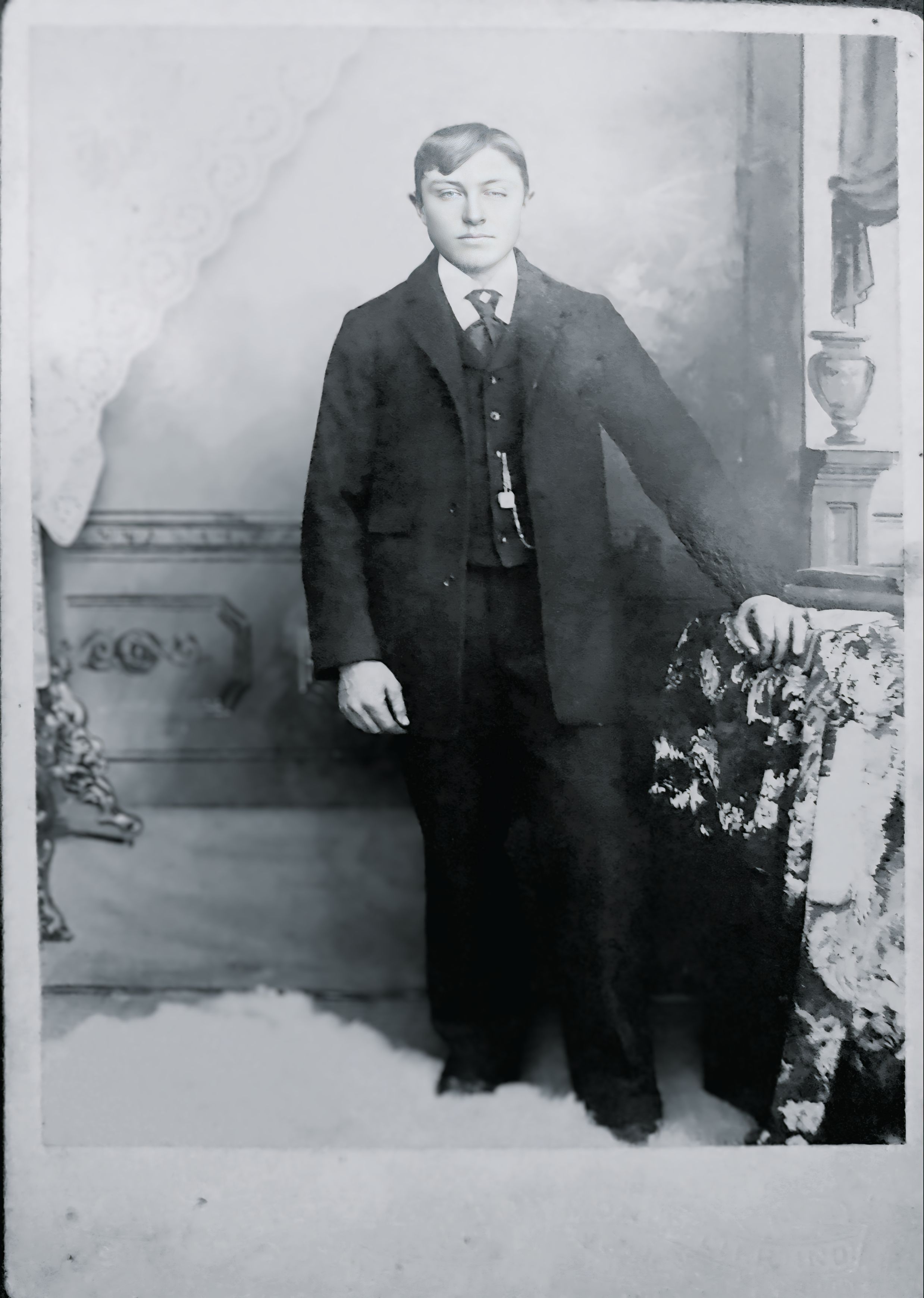

LEFT: Found in a photo album, tucked behind another picture, labeled on the reverse with a snippet of newsprint indicating the pictured young man was Milton Andersen.
RIGHT: From the Bluffton Chronicle, the September 26, 1900 edition, reporting the death of Milton Anderson.
This discovery aligned with the 1900 census mention of the lad Marion Anderson and both clues seemed to also correlate with a late 1990s letter from Aunt Anna Louise (Marion’s now-known-to-be half-sister) sent to Paul’s sister Doris, that included a veiled mention of Marion’s parentage. Although Anna was 20 years Marion’s junior, they enjoyed a close sibling relationship, both residing on the family farm until Marion married at age 30. As Paul searched for further evidence, he discovered that Milton’s family lived north of Craigville, just a few miles from Sarah’s family.
These compelling pieces of evidence, although admittedly circumstantial in nature, led Paul to conclude with 70-80% certainty that he had identified his paternal grandfather. He set out to learn all he could about the 20-year-old who had died in service to his country.
Milton enlisted in the volunteer service on August 3, 1899, in Fort Wayne. As part of the 34th Infantry, he was sent to fight in the Philippine Insurrection, a campaign within the Spanish American War. On September 6, 1900, he drowned near Laguna Bay while on a mission, perishing alongside a fellow infantryman from New Carlisle, Indiana. Another local recruit, a bunkmate of Milton’s, later reported that while manning a boat carrying provisions, three soldiers drowned when the boat capsized. Milton was the first Wells County resident to lose his life in the Philippine theater. Years later when American soldiers were exhumed, Milton and other soldiers were reinterred at the Presidio National Cemetery in San Francisco. In 2015, Paul and his cousin Joe together sponsored a brick at the Veterans Wall of Honor in Decatur, memorializing Milton’s ultimate sacrifice.

The brick in honor of Milton Anderson at Decatur’s Veterans Wall of Honor.
This summer when I met up with Paul at the Heritage Room at the Berne Public Library, he was on a mission to find more evidence to back his 70-80% certainty. He shared his extensive collection of documents and correspondence along with photos and family tree diagrams and even maps—all neatly organized in folders with legible, meaningful notes penned in the margins. I was more than impressed by the volume and content his efforts had netted. “I am 80 years old and the sole surviving child of Marion and Bessie,” he noted. “And I would like to document and confirm this lineage for future generations.”
While Paul had tested his DNA with Ancestry, he had not pursued a connection to his paternal grandfather via his matches because he lacked an understanding of how to work with his results. A feeling I remembered well from the days spent staring at my own DNA results, with so many pages of unknown DNA matches, all the while murmuring that “it might as well have been written in Greek.”
I explained the basics of sorting matches, where the hope is that four branches will be identified—Mom’s maternal and paternal lines and then Dad’s maternal and paternal lines. The detailed information Paul had accumulated about Milton Anderson as well as his grandmother Sarah Hoffman—who he found to be a direct descendant of Mayflower pilgrims—would be very helpful. I felt sure Paul’s matches would quickly confirm or deny Milton as the father of Marion Gilgen.
Once again, the DNA did not disappoint. I created a family tree connecting Paul’s DNA matches to each other. Soon, I found several matches that intersected with the branches of Milton’s family tree. And when I discovered Paul had matches to both Milton’s father’s siblings and his mother’s siblings, I sent up a mostly silent cheer. When I had confirmed five people from among Milton’s cousins who matched Paul with a relationship of 3rd cousin once removed (3C1R) to 4th cousin once removed (4C1R), I sent him a message, “I think this is conclusive evidence that Milton is your father’s father.” To which Paul replied, “Wonderful news!”
As Paul continues to poke around for bits and clues, big and small, he has discovered that some of his kinfolk did know about Marion being adopted. That’s not surprising considering that the adoption took place two years after Sarah and Otto wed when Marion was 14, and that it was reported in the local newspaper. But during that era, such things tended to be tucked away quietly and were certainly not shared with children or talked about in casual conversation. Our research turned up several public family trees posted on Ancestry, by people not known to Paul, where Milton is listed as Marion’s father. Were these folks privy to information Paul has yet to uncover? It’s on his to-do list to make contact to seek what information they can share about Milton Anderson.
Are you stumped by a genealogical mystery? Maybe you’re an adoptee looking to discover your roots. Have you grown weary of staring at your own might-as-well-be-written-in-Greek DNA results? Send me a message, at bethsteury@gmail.com, so we can discuss a path forward.
 Beth Steury, Author
Family secrets can be a lot of fun or drama. It all depends on what the secrets are and who is involved. I have crashed into a few on my own. I enjoyed reading this.
LikeLiked by 1 person
This is an interesting story from you as usual. You write well and explain things carefully. I’m glad you have so many people who trust you to help them.
LikeLiked by 1 person