
Audrey (Bleeck) Steury grew up in the Salem Children’s Home in Flanagan, Illinois. Audrey’s mother Ida, as she faced end stage tuberculosis, placed eighteen-month-old Audrey in the orphanage with instructions that she be raised in the home and not adopted. Several of Audrey’s first cousins already resided there in a come-and-go arrangement as their parents struggled to provide for their large family. Their mutual grandmother who resided an hour north in Chicago sometimes visited the children. Poor health prevented her from caring for the children, and she passed when Audrey was ten.
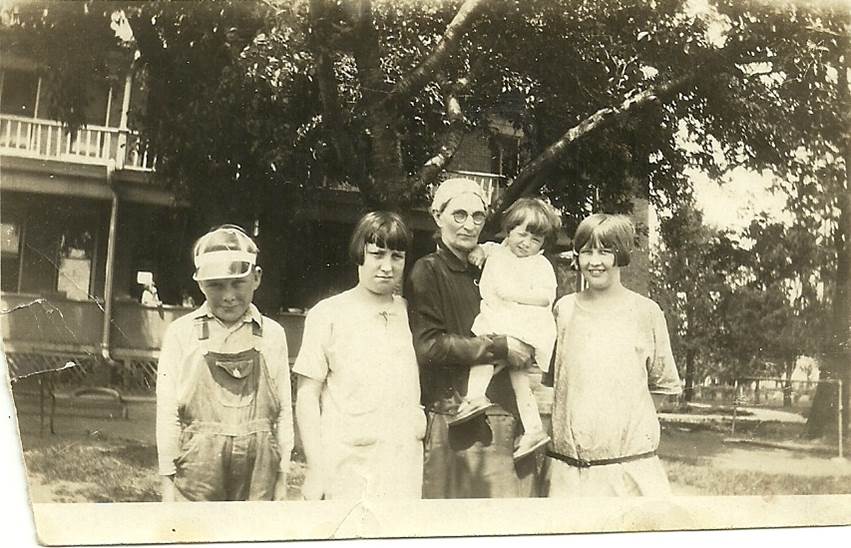
Audrey and her cousins thrived under the loving yet firm hands of directors Chester and Helen Moser. Still, questions about her family nagged at her. What was her mother like? What about her father who was seldom mentioned? And then there was the existence of a brother that her older, maybe wiser cousins, Helen and Dorothy, would often debate. “You had an older brother,” one would assert in that knowing way that an older cousin can get away with. “She did not!” the other would adamantly insist. Audrey, caught in the middle of the dueling sisters, never knew what fueled the rumor of a possible brother. But the ongoing debate between her cousins, who were as close as sisters to her, kept alive for decades the notion of a sibling.
Although Audrey’s experience at the home was indeed a positive one that left her with a wealth of treasured memories and relationships, a sadness claimed a corner of her heart at not being raised by her mother. While growing up, a mere mention of her mother—by the cousins, the orphanage staff, or her mother’s pastor who sometimes visited her at the home—never failed to produce a wave of tears. The conversation would quickly shift to a less traumatic subject as no one wanted to make her cry. So, whatever nuggets of information those folks held—including the truth about the existence of a brother—remained unspoken and were then swallowed up by the passage of time.
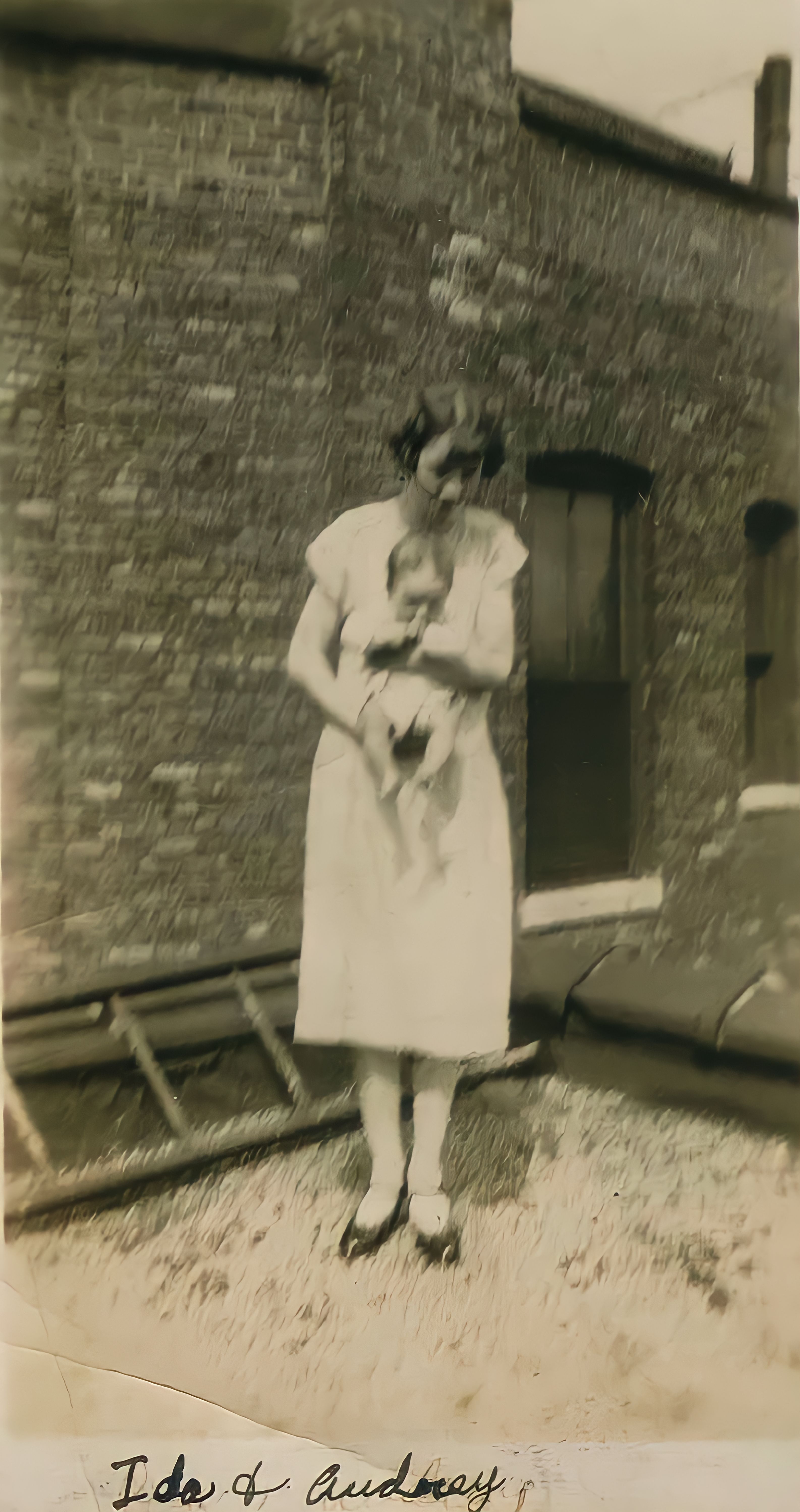
the only photo of Audrey with Ida
By age eighteen, Audrey transitioned from child resident to staff member at the Children’s Home. Through the home’s affiliation with the Evangelical Mennonite Church denomination, Audrey met Ivan Steury whose ancestors had called the Berne/Monroe area home since the late 1800s. In 1948 Ivan accepted a position as manager of the Salem Children’s Home’s dairy operation. In early 1950, the couple wed, and in 1952 they moved to Ivan’s family’s farm between Berne and Monroe where they raised their family of four.
Audrey never forgot about the possibility of a brother. Although she remained close to both her Children’s Home connections and her first cousins in Illinois, no additional family information ever came to light. Fast forward years later to here-and-there conversations with her history-loving, internet-savvy granddaughter, my daughter, Jenna. In 2010 Jenna began building a family tree on Ancestry.com. Digging into the volumes of archived records to piece together her paternal grandmother’s branch of the family tree reignited the question of the maybe-brother.
I remember the day Jenna and I headed to Audrey’s with a plan: to sift out every sliver of information and all fragments of memory about the relatives she’d encountered while growing up in Illinois. And secondly, to share that Jenna had located her mother’s grave.
Audrey was both mystified and thrilled to learn that both her mother and her maternal grandparents were buried at the Bethania Cemetery in Justice, Illinois, within 20 minutes of cousin Dorothy’s daughter who knew nothing of her kin’s final resting place. And then Audrey stunned us by announcing that, according to the pro-brother cousin, Audrey’s older brother had been named Ralph.
Had we missed this rather hefty clue in previous, random conversations? Or, had this long-buried tidbit just recently floated to the surface? Did it matter? We had rooted out a gem of a clue. Well, sort of.
Jenna’s next statement shined a glaring light on the situation. “So, you may or may not have a brother. And he may or may not be named Ralph.”
Audrey chuckled a bit and shrugged. The conversation shifted back to the cemetery discovery, and since the discussion had as yet not caused tears, we forged ahead. Would she be interested in visiting the cemetery? The immediate, affirmative response set in motion plans for a road trip when warmer weather would make trekking through a cemetery more pleasant.
Jenna delved into searching for the maybe-brother with renewed zeal. She discovered four potential Ralphs via online access to Cook County, Illinois, vital records. We ordered a digital copy of a birth certificate for one suspect. Not a match. And then a second one. Not a match either. At a cost of $15 plus a service fee for each birth certificate—money out of my pocket—I suggested we regroup. What were the chances that either of the two remaining Ralphs would be our Ralph? After all, we were chasing a ghost. Someone who may not even exist. So, we paused the search for Ralph and turned our sights toward a cemetery road trip for 10 where we hoped to meet up with kin living in the area.
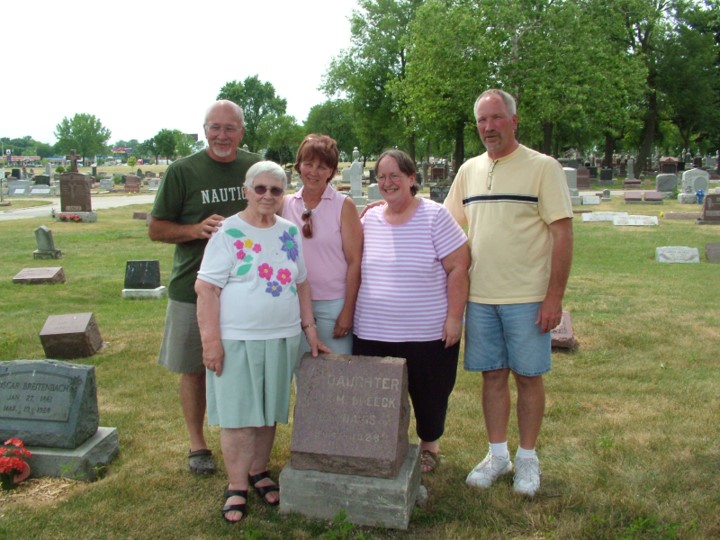
Audrey beamed the entire weekend as we strolled through the huge, well-kept cemetery, exchanged memories and shared dinner with cousin Dorothy’s two daughters, and pored over family history fact sheets Jenna had put together for us. And, of course, continued to collectively ponder the maybe-named-Ralph brother.
Fast forward, again, to late 2016. DNA results had recently resolved the mystery of my biological mother’s identity. We were riding high on our first “solve” when Jenna announced, “If we’re ever going to solve the case of the mystery brother, we need to test Grandma’s DNA.” So, we snagged a Christmas-discounted DNA test kit and waited not-at-all patiently for the email alert announcing the results.
When the notice arrived weeks later, we pounced on the results, me hunkered down with my laptop in my favorite booth at McDonald’s and Jenna at home with her four-year-old, also poring through the DNA matches. Six hours and four Diet Coke refills later, we were 90% certain we had solved the case. Audrey did indeed have a brother and guess what? His name was Ralph.
Another six hours of research produced the record of Ralph’s birth certificate listing Ida as his mother, living at the same address as was noted on Audrey’s birth certificate. The amount of shared DNA between Ralph’s daughter Donna—an unknown-to-us match on Jenna’s DNA results—confirmed that the 16-months-older Ralph and Audrey were full siblings. Ralph had passed in 1992, his wife in 2015, but he had eleven children. Now, to make contact with these new relatives who we hoped could fill in the blanks about how Ralph had come to be adopted and what he might have known about his mother or his sister.
Multiple attempts to connect via a generic, “It looks like we’re related” type message—through Ancestry, via email, and snail mail—failed. Finally, we wrote a lengthy letter detailing the path that led us to believe that Ralph and Audrey were indeed full siblings. Our persistence paid off and soon, we were in touch with three of Ralph’s children who shared that, yes, he’d been adopted but they knew nothing more than that. They described a wonderful family man who after serving his country in World War II settled in Washington state. Later, he returned to the Chicago area where he and his wife Barbara raised their family. A love of the Northwest drew them back to Washington state where he passed in 1992 from complications of dementia. Ralph had talked little about his growing up years, and his children never met his adoptive parents. His mother had passed while he was overseas during the war.
As word that “ . . . it looks like Dad had a sister . . . ” circulated through Ralph’s family, a flurry of photos and bits of memories were exchanged as two families tried to fill in eighty-year-old blanks. The more we pondered the blanks, the more questions arose. Within weeks, Ralph’s daughter Sandi, her daughter Ericka, and grandson Adrian journeyed from Aurora, Illinois, to join our family in celebrating Audrey’s 91st birthday. We’re a pretty big, loud, somewhat rowdy bunch ordinarily. Factor in the joy of solving the case of the mystery brother AND meeting some of his family, and I worried we might completely overwhelm Sandi who said she just wanted to look her dad’s sister in the eye. We instructed everyone to be on their very best behavior and donned color-coded nametags to aid the new folks in making their acquaintance with forty-five new family members.
By this time, dementia had stolen a portion of Audrey’s memory and ability to reason. She had responded with shocking confidence, “Of course I had a brother,” when we shared the confirmation of the maybe-named-Ralph sibling. And although she daily asked if today was the day those people were coming, she didn’t really understand the significance of this particular family gathering. But the rest of us did. And we relished every moment of being together with folks who immediately felt like family.
Before we made our case to Ralph’s children that our mother/grandmother/great-grandmother was their dad’s long-lost sister, we wanted to get a digital copy of Ralph’s birth certificate to add to the DNA proof. When Jenna visited the Cook County vital records site again, a tiny number 1 peeked from the “cart” symbol in the upper right-hand corner. Would you believe that the item in the “cart” was none other than the correct Ralph’s birth certificate? For five years, this crucial document had sat there, waiting patiently to solve the case of the mystery brother.
We remain in contact with Ralph’s family and still hope to meet more of his children and grandchildren. Though the answers came too late for Ralph and Audrey—who passed in 2019—there’s still time for those of us who remain to compare the resemblances of first cousins. To mull over the questions that will probably remain unanswered. And to share the wonder of DNA connections that neither time nor distance can erase.


I love these stories. Thanks for sharing!
LikeLike