
For as long as I can remember, I’ve been a lover of books, of immersing myself in the pages of a story. I began devouring novels in elementary school, methodically reading my way through the still-wildly- popular-today Boxcar Children series. I still hold dear the books penned by Carol Ryrie Brink, favorites being Caddie Woodlawn and The Pink Motel that I absolutely adored. The 1930s published Mr. Popper’s Penguins will forever remain on my most loved list. What a treat to introduce my grandson, a few years ago, to the Stillwater, Minnesota family who trained a troop of penguins to perform on stage.
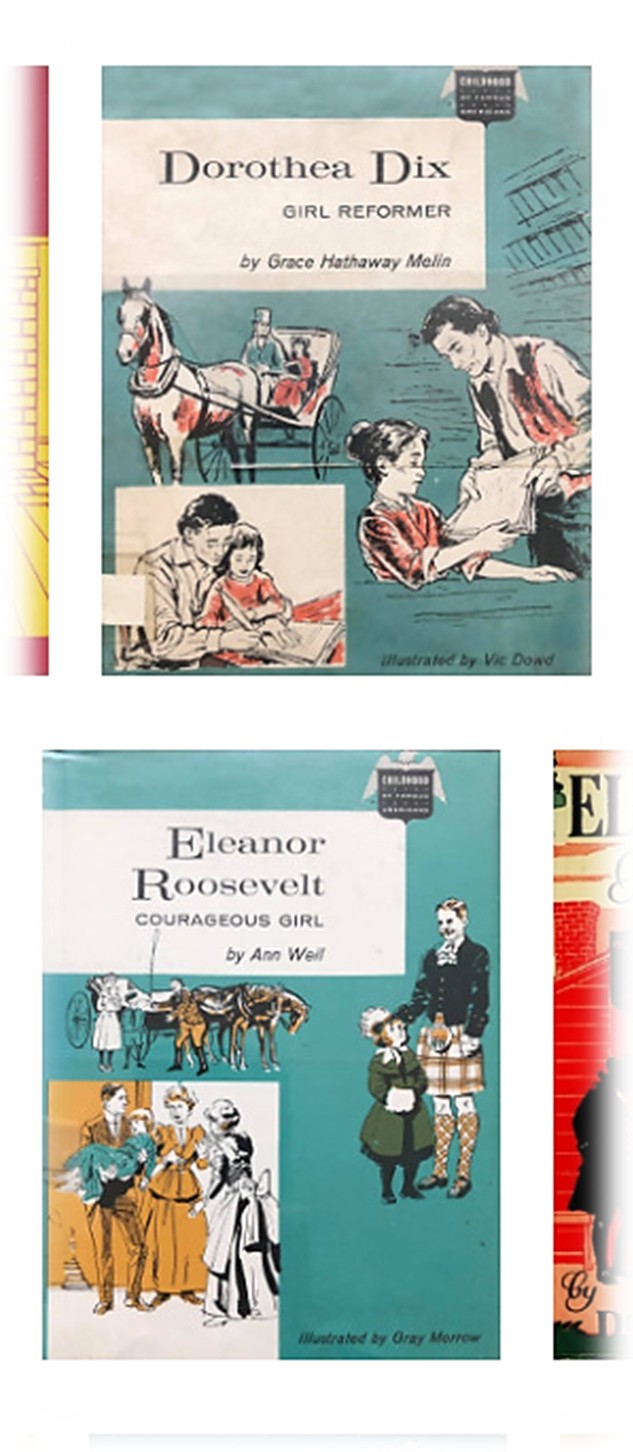
Around the fourth grade, I moved to the biography room of our school library where the story-like retellings that featured adventurous men and women from the past drew me in. I must have read nearly all of the Childhood of Famous Americans Series, igniting in my soul a lifelong pull toward true stories.
Through middle school and high school, I often juggled two books at a time, one for pleasure and another specific to an assignment. Long bus rides to and from school offered the perfect opportunity to escape into a fictional world. The love of reading followed me into adulthood and my reading selections expanded to include more non-fiction. I continued to have at least one book going at all times—sometimes an immersive novel and an engaging work of non-fiction—finishing several books each month. I was heartbroken when extreme all day “morning sickness” while pregnant with my daughter made reading nearly impossible. I managed to read only one book through the entire, very long pregnancy. When I finally conceded defeat, I turned my focus to compiling a list of the books I’d savor once the veil of nausea lifted.
When I attended my first writer’s conference just weeks before the symptom-riddled pregnancy commenced, I intentionally embarked on a journey to learn the craft of writing fiction. A challenging pregnancy followed by caring for a chronically ill infant sidelined that learning path but did not douse the desire. Eventually, the intentionality returned, and as I learned and studied and wrote, what I liked and didn’t like in the works of fiction that I toted home from the library jettisoned to the surface with alarming clarity. An ever-growing list of annoying irritations etched themselves onto a bold-fonted list in my mind.
Immersing myself in fictional worlds became less satisfying. Of course, I continued to read. Because I couldn’t even imagine a life without reading. But more and more often, a book landed in the DNF pile. For those not familiar with this widely-used-among-avid-readers abbreviation, it stands for “Did Not Finish.” In my past life, I’d rarely put a book aside—even a novel I didn’t care for that much—due to my profound respect for books in general.
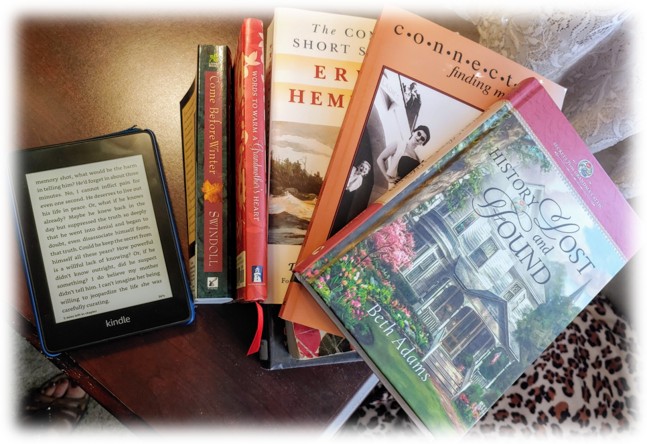
I’d become a critic whose internal editing pen refused to be idle. Consumed with fixing typos, replacing overused words, flagging issues with tense, and, well, the list of offenses grew. I’ve always been a stickler for punctuation, so missing, misplaced, or mismanaged commas never went unnoticed. But suddenly, their presence glared like a motion sensor flooding the yard with 10,000 watts of light. And don’t even get me started on the suspension of disbelief—the act of choosing to put aside logic and accept a story’s that-can’t-happen-in-real-life elements, so as to allow oneself to enjoy the story. I get it, that fiction is based on creative imagination rather than facts. But pa-leeze! Must we abandon the pursuit of plausibility completely?
It seemed my ability to go with the flow for the sake of the story had taken a hike. Gone were the days of reading with nary a thought to story structure and voice. No more letting slip the lack of characterization or, how often characters acted or reacted in ways sooooo entirely out of character simply because said reaction conveniently fit the story line. And, when the resolution/mystery/dilemma wrapped up in a paragraph or even a single page? Grrrr . . . Come on, authors! An invested reader deserves a more complete and satisfying conclusion!
I challenge myself to deal with the occasional swipe of the mental “red pen.” Focus on the story, I instruct. When the occasional slips to the frequent, Just ignore it, I gruffly admonish. But when the pen’s ruby ink runs low due to an abundance of corrections/notations/strikeouts, that’s another story. Because then it just becomes too much like work and too little like relaxing enjoyment.
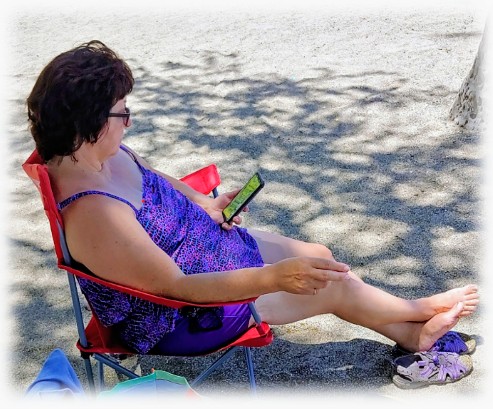
Reading on the beach in Hawaii.
I will forever miss the days of carefree reading that I enjoyed in my former life. As I do not foresee a time when that whimsy will return, I cling ever so gratefully to the Amazon offer to download, to my Kindle e-reader, free samples of books that interest me. This feature has saved me much aggravation as I no longer have to purchase or check out a book to gauge its readability. I vow to, henceforth, fully (and continuously) take advantage of this helpful feature.
A similar list of annoying irritations applies—minus the punctuation and spelling fixation, of course—when we watch movies, a series, or even documentaries. Areas of deep concern that do not trouble my husband in the least. But that’s a rabbit hole for another time.

